
A Renaissance Altarpiece, Reassembled After Four Centuries
Raphael painted his first altarpiece around 1504. Nuns later sold it panel by panel. In 2026 a New York museum brought the pieces back into the same room.
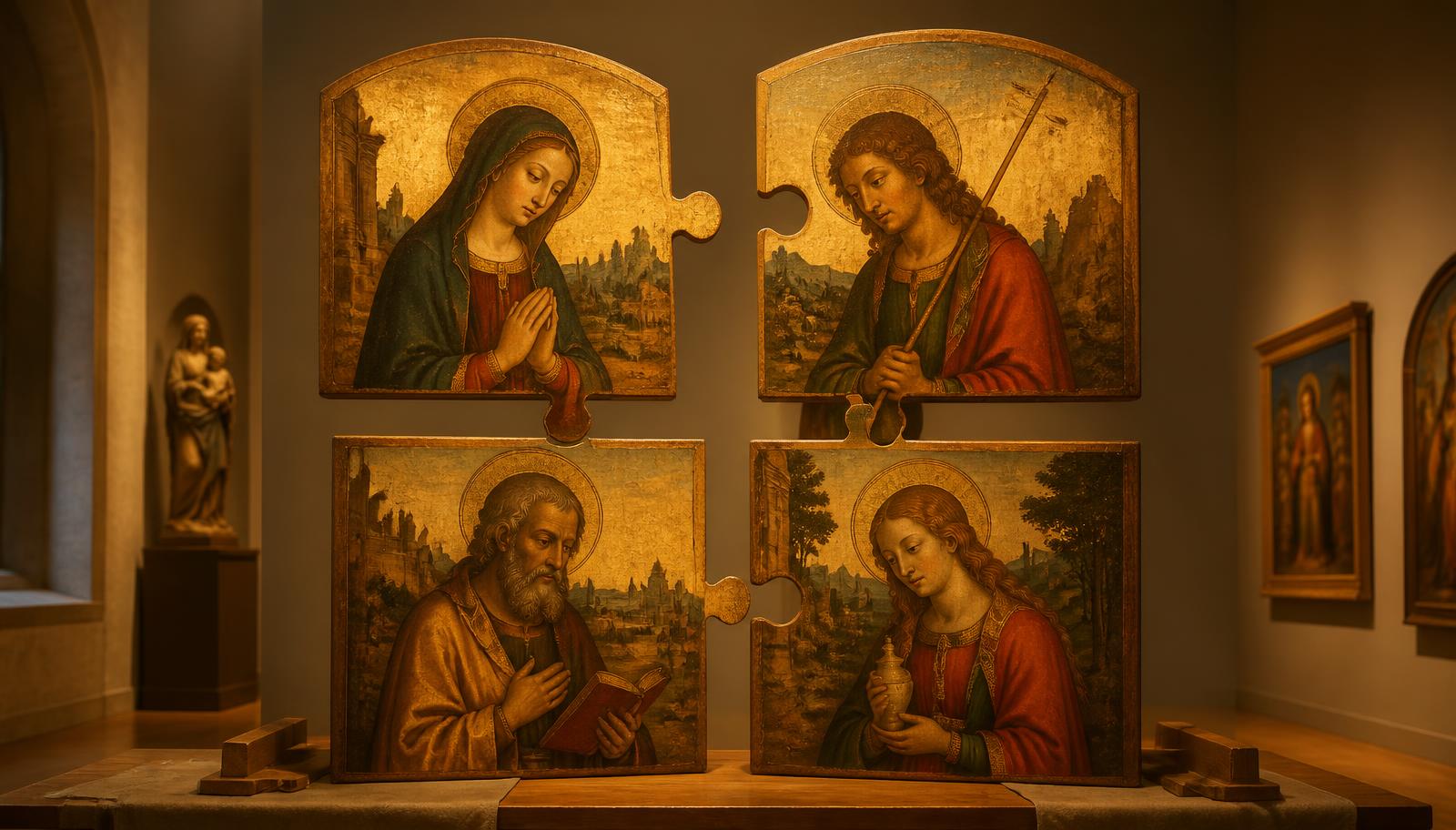
Most art history is told through what survived. The more interesting story is usually what got separated.
Raphael — Raffaello Santi, born 1483, dead at 37 in 1520 — painted his first altarpiece in about 1504-05, the work now known as the Colonna Altarpiece. It did not stay whole. In the seventeenth century the nuns who owned it sold it in pieces, and its panels drifted into different collections in different countries, where they were catalogued, conserved and admired separately for centuries.
This spring, they were brought back together.
What the Met actually did
"Raphael: Sublime Poetry" ran at the Metropolitan Museum of Art in New York from 29 March to 28 June 2026. The museum described it as the first comprehensive international loan exhibition dedicated to Raphael ever held in the United States — a striking gap, given how thoroughly his name saturates the popular idea of the Renaissance.
The exhibition's quiet centrepiece was logistical rather than theatrical: the reunion of the Colonna Altarpiece's dispersed panels, negotiated across lenders and prepared by conservators, so that visitors could see the parts in relation to each other rather than one at a time in separate cities.
That is harder than it sounds. Panels that have spent 400 years apart have been cleaned by different hands to different standards, restretched, reframed, sometimes trimmed. Putting them side by side does not restore the original object. It restores the question of the original object.
The reunion changed the argument
Scholarship moves when evidence sits together. Research discussed alongside the reunion raised the possibility that some of the panels may not have been conceived as one continuous scheme at all — that parts of what we call an altarpiece may have begun life as more independent works. The Met's own earlier bulletin on the Colonna Altarpiece, published two decades ago, is now one layer in a longer argument rather than the final word.
For visitors, the effect was less academic. Coverage of the show noted that it set Raphael's serene Madonnas against the harder social reality behind them: an era of high infant and maternal mortality, in which images of untroubled motherhood were consolation as much as decoration. Preparatory drawings shown next to finished paintings did something similar, exposing the labour behind the calm.
Why this matters after the show closed
The exhibition is over. What remains is more durable than a ticket queue.
- **The panels are documented together.** Photography, technical imaging and conservation notes made during a reunion outlast the reunion itself.
- **The scholarship is now in circulation.** Catalogue essays and comparative research reach far more people than a gallery ever could.
- **Precedent has value.** Every successful multi-lender reunion makes the next one slightly easier to argue for.
There is an obvious romantic reading here — the family portrait finally reassembled — and it is worth resisting a little. The panels went back to their owners. The altarpiece is dispersed again. Nothing was permanently undone.
But for three months, a work that had not been whole since the 1600s was legible as something close to itself, in one room, in front of anyone who walked in. That is not restoration. It is closer to a conversation being briefly resumed after a very long pause — and the record of it stays.
Have a Beaux day.
- raphael
- renaissance
- museums
- conservation
- new york