Machu Picchu Is Not Harder To Visit — Just Less Improvised
Timed entry, fixed circuits and capped daily numbers now govern Peru's most famous site. Read the rules once and the visit gets better, not worse.
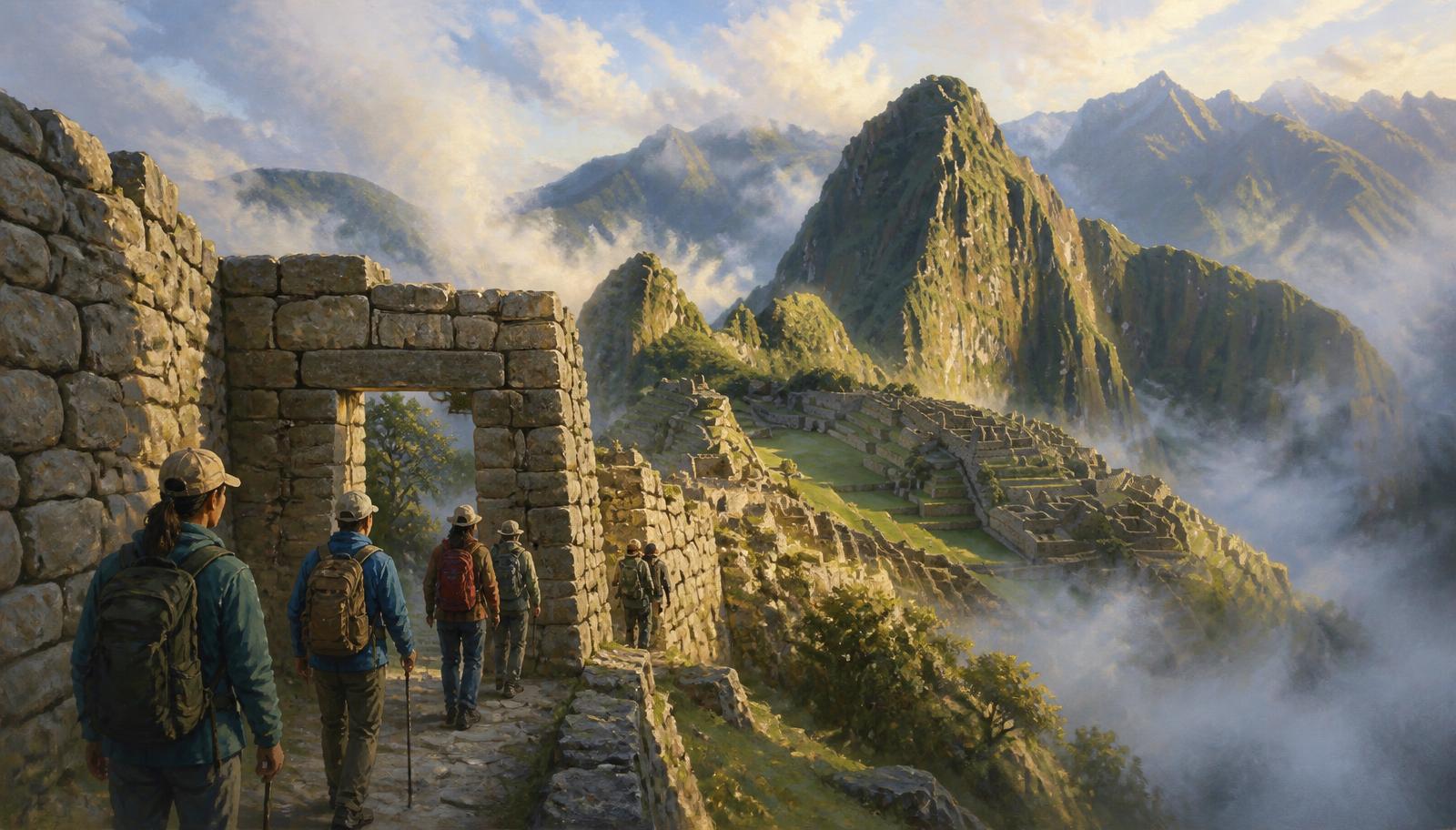
The complaint about Machu Picchu is almost never the place. It is the queue, the crowd, the sense of shuffling.
Peru's response has been steady rather than dramatic: replace improvisation with structure. The result is a site you have to plan for in advance and can then actually experience.
The rules that matter
Four things shape a modern visit.
**Timed entry.** Tickets are sold for a specific entry window rather than a whole day. You arrive when your ticket says.
**Fixed circuits.** Rather than wandering freely, visitors follow designated routes. These are grouped broadly into a panoramic route, the classic citadel route, and a lower royal route, with defined variants inside them — including the separate ticketed add-ons for Huayna Picchu and Machu Picchu Mountain, which have their own limited places and their own entry times.
**Daily capacity.** Numbers are capped, with the cap adjusted seasonally and higher allowances in peak months. Places genuinely run out.
**One-way movement.** Circuits are walked in a set direction. You cannot double back to re-photograph something you passed.
That last rule is the one that catches people out, and it is worth internalising before you arrive: choose your circuit on the assumption that you get one pass.
Buy from the right place
Tickets are sold through Peru's official government channel, tuboleto.cultura.pe. Buy there, or through a reputable licensed operator that issues an official ticket in your name.
Resale sites, "guaranteed access" packages and anyone offering sold-out dates for a premium are the standard failure mode. Because entry is tied to a named ticket, a timed window and a specific circuit, a wrong or invalid ticket is not a small inconvenience — it is a non-entry, on a date you cannot easily change.
Also plan the leg before the site. Access runs via Cusco and the Sacred Valley to Aguas Calientes, largely by train, and the Inca Trail is separately permitted with its own limited allocation booked well in advance. High-altitude acclimatisation in Cusco before travelling is a practical necessity for most visitors, not a luxury.
Why the rules exist
Machu Picchu is a UNESCO World Heritage Site and, more importantly for these purposes, a fifteenth-century Inca site of stone terraces, staircases and drainage built for a very small resident population. Foot traffic is a conservation load. Capacity caps, one-way flows and fixed circuits are how a fragile place stays open at all.
Framed that way, the paperwork is not bureaucracy for its own sake. It is the mechanism by which the site continues to exist in a condition worth travelling for.
A note on accuracy
Specific circuit numbers, exact daily caps, seasonal allowances and prices change, sometimes at short notice and sometimes in response to conditions on the ground. We have deliberately described the structure rather than quoting figures that may be stale by the time you read this.
Before you book, confirm current circuits, capacities, prices and any access advisories directly on the official ticketing site and Peru's Ministry of Culture channels. Then buy early, pick your circuit deliberately, and arrive in your window.
The site rewards preparation more than spontaneity. That is not a loss. Nobody who has stood on a terrace at their allotted hour, in a place that is still standing after 500 years, has ever wished they had queued longer.
Have a Beaux day.
- peru
- machu picchu
- responsible travel
- unesco
- travel planning